




If you have been browsing the hemp aisle lately, you have probably seen two acronyms popping up everywhere: THCP and THCA. They look almost identical on a label, they sit next to each other on the shelf, and they both promise something more than your average gummy. But these two cannabinoids are not interchangeable. One is a heat-activated powerhouse hiding inside raw hemp flower. The other is one of the most receptor-hungry cannabinoids ever discovered in the plant. Knowing the difference is the difference between picking a product that hits the way you want and one that sends you straight past your stop.
At Galaxy Treats, we craft hemp-derived edibles in the USA with real fruit terpenes and ship every batch through third-party lab testing for purity and potency. This guide breaks down THCP vs THCA in plain language, explains how each one shows up in our extra strength gummies, and helps you choose a launch intensity that matches what you are actually looking for.
What Is THCA and How Does It Work?
THCA, short for tetrahydrocannabinolic acid, is the raw, naturally occurring acidic precursor to delta-9 THC. When a hemp plant is alive and growing, it produces almost no delta-9 THC at all. What it produces is THCA, which sits in the trichomes of the flower until something activates it.
On its own, THCA is non-intoxicating. It does not bind well to the CB1 receptors in your brain, which are the receptors responsible for the psychoactive effects most people associate with cannabis. In silico binding studies published in 2025 classify THCA as a weak agonist at CB1, far less active than delta-9 THC at the same site. That is why eating raw hemp flower will not get you high, no matter how much THCA the lab certificate shows.
How does THCA become THC?
The transformation happens through a process called decarboxylation. When THCA is exposed to heat, it sheds a carboxyl group (COOH), releases carbon dioxide, and converts into delta-9 THC. This is the chemical reaction that actually gets you elevated. According to the USDA's official hemp regulations, the conversion ratio is set at 87.7 percent, meaning roughly 0.877 grams of delta-9 THC are produced for every 1 gram of THCA that fully decarboxylates.
Decarboxylation typically happens in the 200 to 290 degrees Fahrenheit range, with most processors targeting around 240 degrees Fahrenheit (115 degrees Celsius) for clean, complete conversion without degrading the surrounding terpenes. That is why a THCA pre-roll feels like classic flower the moment you light it: the flame instantly converts the THCA into active THC. If you would rather smoke than chew, our guide to THCA pre-rolls for busy professionals walks through how that activation plays out in real life.
Does THCA show up in edibles?
Yes, but the role it plays in a gummy is different from the role it plays in flower. When THCA is incorporated into a manufactured edible, it has typically already been processed and converted, or it sits alongside other active cannabinoids that contribute to the overall experience. The flower side of our catalog, like our Space Nugz collection, is where THCA shines in its smokable form. For deeper background on what raw THCA actually does in your system, our blog Does THCA Get You High? breaks it down further.

What Is THCP and Why Is It So Potent?
THCP, short for tetrahydrocannabiphorol, is one of the most exciting discoveries in modern cannabinoid science. It was first isolated from cannabis sativa in 2019 by an Italian research team led by Cintia Citti and Giuseppe Cannazza, and their findings were published in Scientific Reports. Until that point, scientists had only theorized that a cannabinoid like THCP could exist. Citti's team confirmed it occurs naturally in the plant, just in extremely small amounts.
Structurally, THCP looks almost like delta-9 THC with one critical upgrade. Where delta-9 THC has a five-carbon side chain attached to its core ring system, THCP has a seven-carbon side chain. That tiny difference completely changes how the molecule fits into the body's CB1 receptors, which are the binding sites in the brain and nervous system most associated with the cannabis high.
How much stronger is THCP than THC?
In the original Citti et al. study, THCP showed a binding affinity (Ki value) of approximately 1.2 nanomolar at the CB1 receptor, compared to roughly 40 nanomolar for delta-9 THC. That works out to about 33 times the binding affinity of delta-9 THC. This is the most aggressive CB1 binding affinity ever recorded for a naturally occurring cannabinoid.
There is an important nuance here that gets misreported all the time. Binding affinity is not the same thing as potency in the milligram-for-milligram sense. THCP fits into the CB1 receptor lock more tightly than delta-9, but the actual subjective high from a finished product depends on dose, formulation, individual tolerance, and the surrounding cannabinoid blend. The safest way to think about it is that you need far less THCP to feel something significant compared to delta-9 alone, which is exactly why our extra strength gummies use THCP in tightly controlled small amounts alongside delta-8 and delta-9.
If you want to go deeper on the molecular side of things, our blog What is THCP: A Complete Guide For Beginners unpacks the science from the ground up. For a more experiential read, THC-P Effects: What You Need to Know About This Super-Potent Cannabinoid covers what users actually report.

THCP vs THCA: The Core Differences
Both cannabinoids show up in legitimate hemp-derived products, but they live on opposite ends of the cannabinoid spectrum. THCA is the precursor that needs activation. THCP is the rare end-state cannabinoid that hits CB1 receptors with extraordinary efficiency. Here is how they compare on the points that actually matter when you are picking out a product.
Psychoactivity in raw form
Raw THCA is non-intoxicating. You can hold a jar of high-THCA flower without feeling anything. THCP, by contrast, is psychoactive in its natural state and binds to CB1 receptors immediately. There is no activation step required for THCP to do its thing.
Natural abundance in hemp
THCA is one of the most abundant cannabinoids in cultivated hemp flower. Premium THCA strains commonly test at 25 to 30 percent THCA by dry weight. THCP, on the other hand, occurs in concentrations typically well below one tenth of a percent. That scarcity is why most THCP-infused products on the market today, including ours, use THCP as a small but powerful ingredient layered on top of other cannabinoids.
Onset and delivery method
THCA shines in inhalable formats like flower and pre-rolls because heat converts it instantly. THCP is well suited to edibles because its high binding affinity means a small dose still delivers significant effects after the slower edible onset. Our extra strength gummies build their experience around that principle. If you want a side-by-side primer on inhalation versus edibles, our Gummies vs Vaping comparison covers the trade-offs.
Effect intensity and duration
THCA, once activated to delta-9 THC, produces classic THC effects with a duration tied to your method of use. THCP-containing products tend to feel heavier in the body and longer in duration when paired with delta-8 and delta-9 in an edible matrix, because THCP keeps CB1 receptors engaged at lower concentrations. This is the science behind the launch intensity scoring on our extra strength jars.
How Galaxy Treats Uses THCP and THCA in Extra Strength Gummies
Our extra strength gummies are where the THCP science lives in our edible catalog. The format is built for people who already know their way around hemp products and want a heavier, longer-lasting experience without piling on multiple gummies.
What is in our 125mg D8-D9-THCP gummies?
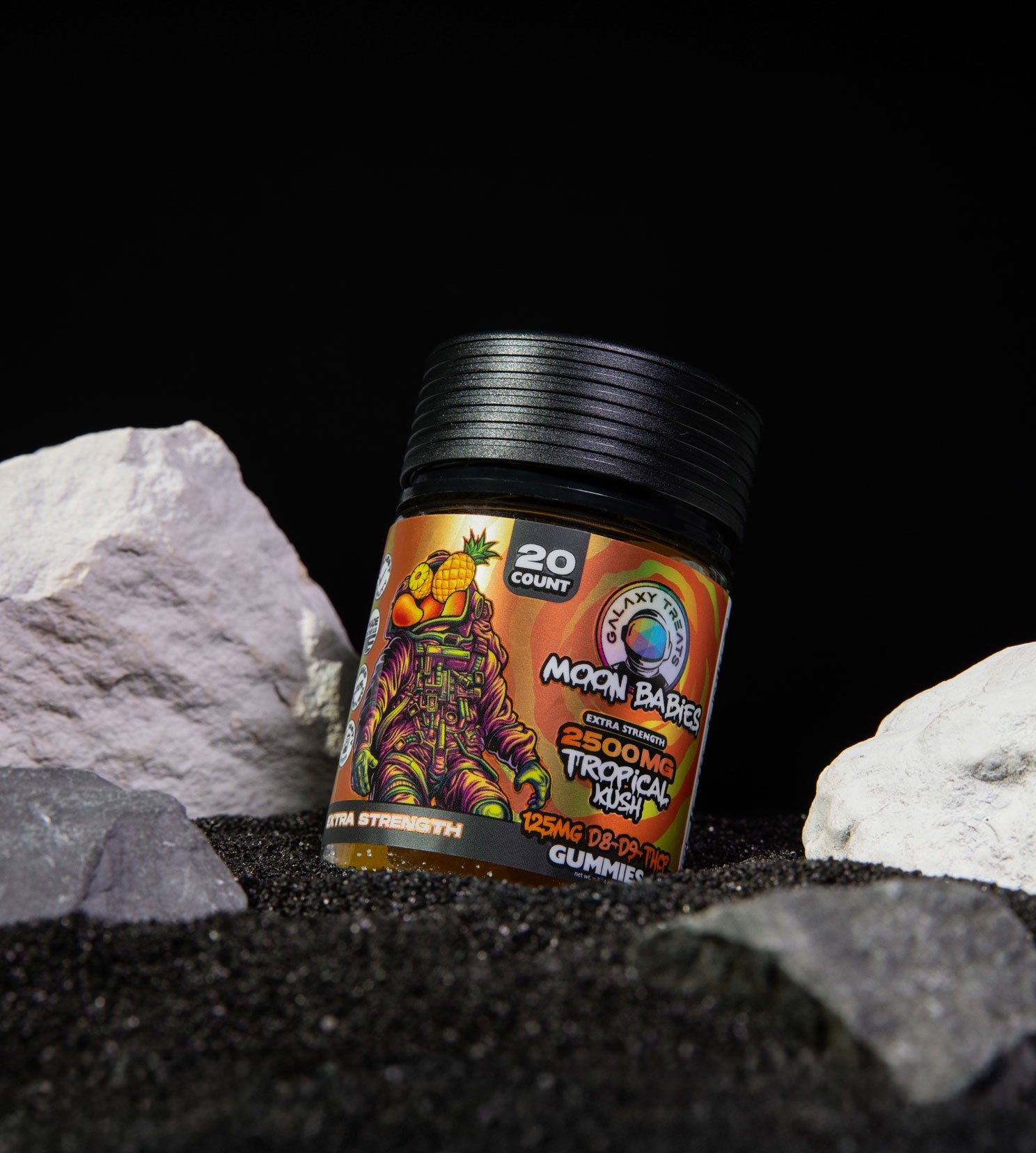
Each gummy in the Extra Strength D8-D9-THCP collection is dosed at 125mg of combined cannabinoids per piece, blending hemp-derived delta-8 THC, delta-9 THC, and THCP with terpenes for a full-spectrum profile. The flavors include Blue Punch OG (Launch Intensity 100), Berry Melon Lifter (Launch Intensity 95), and Tropical Kush (Launch Intensity 85). Every batch lands in a 20-count jar, which gives you twenty serious sessions in a single buy.
The reason we layer THCP into a primarily delta-8 and delta-9 base is that THCP excels at extending and deepening the experience without forcing the dose of delta-9 to climb past comfortable levels. The result is a gummy that supports mood enhancement, deeper relaxation, sleep support, and appetite activation in one chew. We chose this formulation because users kept telling us they wanted something that felt heavier than a standard 10mg delta-9 gummy without crossing into territory that felt unmanageable.
How does this compare to extra strength delta-8 only?
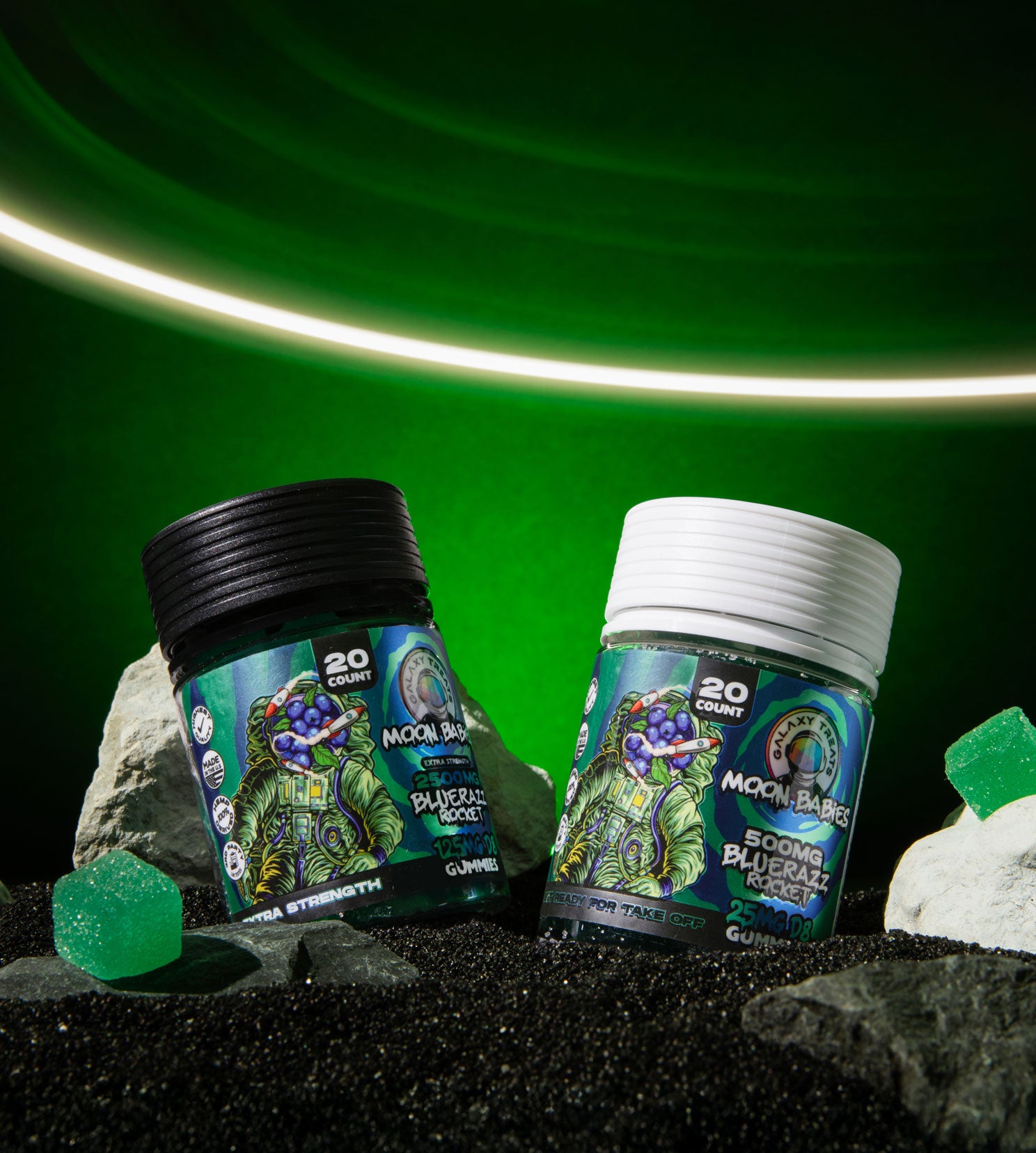
We also make a 125mg Extra Strength Delta-8 line that does not include THCP. These come in Starberry, Bluerazz Rocket, and Razzleberry Limeade, with launch intensities ranging from 95 to 100. Same milligram count, different molecular story. The delta-8-only version delivers a smooth, classic relaxed body high. The D8-D9-THCP version delivers something more layered and more potent, with the THCP component pulling extra weight on the CB1 binding side.
Our blog on the Power of Extra Strength Delta 8 Gummies walks through what to expect from the delta-8-only line. For more on stacking cannabinoids responsibly, our guide to safely stacking D8 with other cannabinoids is a smart read before sizing up.
Where does THCA fit into the Galaxy Treats lineup?
THCA primarily lives on the flower and pre-roll side of our catalog. Our Space Nugz THCA flower collection (Cereal Milk, Green Crack, Trop Cookies, Platinum Kush) and our 1.5g THCA pre-rolls are where you experience THCA in its most direct form. The heat from inhalation activates the THCA on contact, converting it into delta-9 THC and delivering the kind of immediate, classic flower experience that edibles cannot replicate. Both formats coexist in our brand for a reason: different formats serve different missions.

How to Choose Between THCP and THCA Products
Picking between a THCP gummy and a THCA pre-roll is really a question about what you want your session to look like. The cannabinoid content matters, but so does how fast you want effects, how long you want them to last, and what you are doing for the next several hours. Here is how we coach customers through the decision.
When does a THCP gummy make more sense?
Reach for our 125mg D8-D9-THCP gummies if you are an experienced user who wants a longer, heavier ride without lighting anything up. Edibles take 30 to 90 minutes to kick in and tend to last four to six hours, sometimes longer. The THCP component in these gummies is what allows the formula to feel substantial without ramping the delta-9 milligram count to extreme territory. Bedtime sessions, deep relaxation evenings, and movie nights at home are the exact use cases this product was built for. For more on what to expect from THC edibles over time, our piece on what THC gummies actually feel like after one week is worth bookmarking.
When does a THCA flower or pre-roll make more sense?
Pick THCA flower or pre-rolls if you want fast onset, full sensory ritual, and the ability to dial your dose puff by puff. Inhalation hits in seconds and tapers within one to three hours, which makes it the better choice for shorter sessions, social settings, and creative work where you do not want a six-hour commitment. Strain selection matters here too: a sativa like Green Crack or Trop Cookies leans uplifting and creative, while an indica like Platinum Kush leans toward full-body chill.
What about new users?
If you are new to hemp-derived THC entirely, neither extra strength THCP nor potent THCA flower is the right starting point. Begin with our 10mg delta-9 gummies, learn how your body responds, and only then explore stronger formats. Our beginner-friendly Delta 9 Gummies guide is the right first stop for newcomers, and the Delta 8 Gummies beginner's guide is right behind it.
Are THCP and THCA Safe and Legal?
Both THCP and THCA are naturally occurring cannabinoids found in the cannabis sativa plant. At Galaxy Treats, every product we sell is hemp-derived, manufactured in the USA, and third-party lab tested for purity, potency, and contaminants. We publish certificates of analysis for every batch and stand behind every product with a 30-day satisfaction guarantee.
On the legal side, hemp-derived cannabinoid products were originally made federally accessible by the 2018 Farm Bill, which defined hemp as cannabis containing not more than 0.3 percent delta-9 THC by dry weight. In November 2025, Congress passed updates to that framework that begin taking effect in November 2026, so the regulatory landscape continues to evolve. Product availability also varies by state because each state regulates hemp products independently. We always recommend checking your local laws before ordering.
These are adult-use products. They are not intended for anyone under 18 or 21 depending on your state, and they are not intended for use during pregnancy, nursing, or alongside prescription medications without medical guidance. The Cliff Notes version: read your labels, start low, store responsibly, and treat hemp-derived THC like the powerful cannabinoid blend it is.

Why Galaxy Treats Is the Trusted Source for THCP and THCA Products
Galaxy Treats handcrafts industry-leading hemp-derived edibles and flower in the USA. Every product is formulated with real fruit terpenes, blended for clean and consistent experiences, and tested by independent third-party labs for purity and accurate potency. We label every jar and every flower bag with a clear cannabinoid breakdown and a Launch Intensity score so you always know what you are stepping into before you take off.
Whether you are picking up a 125mg D8-D9-THCP gummy for a heavier evening or a 3.5g jar of THCA flower for a Sunday cruise, you are getting product built around the science instead of around the hype. That is the Galaxy Treats promise: cosmic-level good times with zero shortcuts on quality.
Frequently Asked Questions
Is THCP stronger than THCA?
Yes, in terms of CB1 receptor binding affinity, THCP is dramatically stronger than THCA. THCA in its raw form is non-intoxicating and binds weakly to CB1 receptors. THCP, by contrast, binds approximately 33 times more tightly to CB1 receptors than delta-9 THC. That said, THCA converts into delta-9 THC when heated, and at that point it produces classic THC effects. The honest answer is that THCP is the more potent cannabinoid molecule, but THCA flower delivers a strong, immediate experience once activated by heat.
Will THCP and THCA show up on a drug test?
Most drug tests look for THC metabolites, particularly THC-COOH, which is produced when the body breaks down delta-9 THC. Both THCP and activated THCA can produce metabolites that may register on these tests. If you are subject to drug testing, the safest assumption is to avoid hemp-derived THC products entirely. Our blog on whether delta-8 gummies show up on a drug test covers the testing science in more detail.
How long do THCP and THCA effects last?
Effect duration depends primarily on the format rather than the cannabinoid itself. THCP-containing edibles like our 125mg D8-D9-THCP gummies typically take 30 to 90 minutes to kick in and last four to six hours, sometimes longer with the THCP component extending the tail end. THCA flower and pre-rolls activate within seconds of inhalation and typically last one to three hours. Body weight, metabolism, tolerance, and whether you have eaten recently all influence both onset and duration.
Can you take THCP and THCA together?
You can, but stacking cannabinoids requires caution. Combining a 125mg D8-D9-THCP gummy with a THCA pre-roll, for example, is a substantial combined dose that should only be considered by experienced users. Onset times are different, so the inhaled THCA will hit first while the edible builds in the background. Always start with one product, observe how your body responds, and consult our cannabinoid stacking guide before combining anything.
What is the right starting dose for a THCP gummy?
For our 125mg D8-D9-THCP extra strength gummies, experienced users often start with half a gummy and wait at least 90 minutes before considering more. Edibles take time to fully express, and the THCP component means a half dose is still substantial. New users should not start with extra strength products at all and should instead build up through 10mg delta-9 gummies first.
Are THCP and THCA legal in all 50 states?
Hemp-derived cannabinoid products are subject to federal regulation under the 2018 Farm Bill and to individual state laws that vary widely. Some states restrict or prohibit certain hemp-derived cannabinoid products. Federal hemp regulations are also evolving following legislation passed in late 2025 with effective dates extending into 2026. We recommend checking your state's current hemp laws before purchasing, and product availability on our site is automatically restricted based on your shipping address.
What is the difference between THCA flower and regular hemp flower?
All cannabis flower contains some THCA. The term THCA flower specifically refers to hemp flower that has been cultivated to maximize THCA content while keeping delta-9 THC under the federal 0.3 percent dry-weight threshold required to qualify as hemp. When you smoke or vape THCA flower, the heat converts the THCA into delta-9 THC, producing effects similar to traditional cannabis flower.
Why does Galaxy Treats use a Launch Intensity score?
Total milligram counts can be misleading because cannabinoids hit CB1 receptors at very different strengths. A 125mg gummy with THCP is not the same experience as a 125mg gummy without it. Our Launch Intensity score normalizes those differences into a single 0-to-100 scale based on the total active cannabinoid blend, so you can compare across products and pick the experience that matches what you actually want.