




If you’ve been keeping tabs on the cannabinoid universe, you’ve probably noticed a new name showing up everywhere: THCP. It sounds like another alphabet-soup compound, but this one’s different. THCP (tetrahydrocannabiphorol) has been turning heads since Italian researchers first isolated it in 2019 and for good reason. Early studies suggest it binds to CB1 receptors in the brain up to 33 times more effectively than traditional Delta 9 THC. That’s not a typo.
But what does that actually mean for you? Is THCP really 33 times stronger? How does it stack up against Delta 8 and Delta 9, the cannabinoids most people already know and love? And is it even legal?
Let’s break it all down, no lab coat required.
What Is THCP, Exactly?
THCP stands for tetrahydrocannabiphorol. It’s a naturally occurring cannabinoid found in the cannabis plant but in very, very small amounts (we’re talking less than 0.1% of total cannabinoid content). It was officially identified in December 2019 by a team of researchers at the University of Modena and Reggio Emilia in Italy, who stumbled upon it while analyzing a strain called FM2 using advanced liquid chromatography.
So what makes THCP special? It all comes down to chemistry. THCP has a seven-carbon alkyl side chain, compared to the five-carbon chain found on standard Delta 9 THC. That longer chain allows THCP to bind much more tightly to the CB1 receptors in your endocannabinoid system. The receptors primarily responsible for the psychoactive effects of cannabis.
This stronger binding affinity is where the “33 times more potent” headline comes from. But here’s the important nuance: that figure refers to binding affinity, not subjective experience. In practice, most users describe THCP as roughly 5 to 10 times stronger than Delta 9 THC in terms of how it actually feels. Still significantly more powerful, but not quite the sci-fi number the headlines suggest.
Because natural THCP exists in such trace amounts, nearly all commercial THCP products are made by converting hemp-derived CBD through a controlled chemical process. This is similar to how many Delta 8 products are manufactured, the plant provides the raw material, and the lab does the rest.

Quick Refresher: Delta 8 and Delta 9 THC
Before we compare THCP to its cannabinoid cousins, let’s make sure we’re all on the same page about the two most popular THC variants on the market.
Delta 9 THC
Delta 9 THC is the classic. It’s the primary psychoactive compound in cannabis and the one responsible for what most people think of as a traditional THC high: euphoria, relaxation, heightened sensory perception, the munchies, all of it. Hemp-derived Delta 9 products are federally legal when they contain no more than 0.3% Delta 9 THC by dry weight, which is why you’ll find Delta 9 gummies widely available online. A standard dose for most people falls in the 5-10mg range per serving.
Delta 8 THC
Delta 8 THC is often described as Delta 9’s mellower sibling. It occurs naturally in cannabis in small concentrations and is typically produced from hemp-derived CBD. The effects are similar to Delta 9 but generally lighter and smoother, less head-buzzy, more body-relaxing. Many users prefer Delta 8 for situations where they want to unwind without going full couch-lock mode. It’s a great entry point for newcomers and a reliable standby for experienced users who want something chill.
THCP vs. Delta 8 vs. Delta 9: How They Actually Compare
Now for the main event. Here’s how these three cannabinoids stack up across the categories that matter most:
Potency
This is where THCP really separates itself from the pack. Thanks to its seven-carbon side chain, THCP binds to CB1 receptors dramatically more effectively than either Delta 8 or Delta 9. In real-world terms, a dose of just 1-2mg of THCP can produce effects comparable to 10mg of Delta 9 THC. Delta 8 falls on the gentler end of the spectrum, most users find it roughly 50-70% as potent as Delta 9. So if Delta 9 is the baseline, Delta 8 dials things down a notch while THCP turns the intensity dial way, way up.
Effects
All three cannabinoids interact with the same CB1 receptors and produce a similar family of effects: euphoria, relaxation, mood elevation, appetite stimulation, and sleep support. The difference is largely a matter of intensity and duration.
Delta 8 delivers a mellow, clear-headed experience. You’re relaxed, maybe a little giggly, but still fully functional. Great for daytime use or easing into the evening.
Delta 9 brings the full spectrum: stronger euphoria, deeper relaxation, more noticeable body effects. It’s the tried-and-true experience most cannabis users know well.
THCP amplifies everything. Users report more intense euphoria, heightened sensory perception, deeper body relaxation, and longer-lasting effects. Some describe the onset as slower-building but with a peak that sticks around much longer than a typical Delta 9 experience. THCP edibles, in particular, can produce effects that last well beyond the usual 4-6 hour window.
Duration
Duration is another area where THCP stands out. Delta 8 and Delta 9 effects from edibles typically last 4-6 hours, with inhalation clocking in around 2-4 hours. THCP effects can extend well beyond that, some users report feeling the effects of THCP edibles for 8 hours or longer. If you’re vaping THCP, expect a 2-4 hour experience, though the intensity during that window tends to be significantly more pronounced.
Dosing
Because of its potency, THCP requires much smaller doses than Delta 8 or Delta 9. A comfortable starting dose for Delta 9 gummies is usually 5-10mg. For Delta 8, many people start around 10-25mg due to its milder effects. For THCP? Experienced users often recommend starting at just 1-3mg and working up slowly. The golden rule applies here more than ever: start low, go slow, and give it time to kick in before adding more.

Why Is Everyone Talking About THCP?
THCP’s rapid rise in popularity isn’t just about potency for potency’s sake. There are a few key reasons this cannabinoid has captured the attention of both the cannabis industry and curious consumers:
It might explain why some strains hit harder than others. Ever had two different products with the same Delta 9 THC content but wildly different effects? Some researchers believe trace amounts of THCP (and other minor cannabinoids) could be partly responsible. Even in tiny concentrations, THCP’s strong receptor binding could amplify the overall experience which contributes to what’s often called the entourage effect.
It opens the door to powerful cannabinoid blends. When combined with Delta 8, Delta 9, or other compounds like THCP can create multi-layered experiences that a single cannabinoid can’t deliver alone. These blended formulations are becoming increasingly popular among experienced users looking for specific effects: deeper sleep, stronger euphoria, or more pronounced relaxation.
The science is still young and evolving. THCP was only discovered in 2019, which means we’re still in the early chapters of understanding what it can do. Preliminary research suggests it may share some of THC’s therapeutic properties (pain relief, appetite stimulation, relaxation) but potentially at lower effective doses. That said, clinical trials are still limited, and long-term safety data hasn’t been established yet.
THCP vs. THCA: Don’t Get Them Confused
Since we’re in alphabet-soup territory, it’s worth addressing a common mix-up: THCP and THCA are not the same thing.
THCA (tetrahydrocannabinolic acid) is the raw, non-psychoactive precursor to Delta 9 THC. It’s found abundantly in fresh cannabis flower and only becomes psychoactive when heated in a process called decarboxylation. When you light a pre-roll or vape a live resin disposable, you’re converting THCA into active THC on the spot.
THCP, on the other hand, is its own distinct cannabinoid with a unique molecular structure. It doesn’t need to be converted into anything, it’s psychoactive as-is and significantly more potent than the THC that THCA converts into.
Here’s the easiest way to remember it: THCA is a starting material that becomes THC. THCP is a separate, more powerful compound altogether. Both are found naturally in the cannabis plant, but they play very different roles in the experience you feel.

Is THCP Legal?
The legal landscape for THCP and hemp-derived cannabinoids in general, is evolving fast, so this is an area worth paying attention to.
Under the 2018 Farm Bill, hemp-derived products containing less than 0.3% Delta 9 THC by dry weight were federally legal. Since the law specifically referenced only Delta 9 THC, other cannabinoids like Delta 8, and THCP existed in a legal gray area, technically permissible at the federal level as long as they were derived from compliant hemp.
However, in November 2025, Congress passed new legislation as part of a broader appropriations package that significantly narrowed the definition of hemp. The updated law shifts from a Delta 9-only standard to a total THC standard (including THCA) and excludes cannabinoids that are synthesized or chemically converted outside the plant. Since most commercial THCP is produced through CBD conversion, these changes could directly affect THCP products when the law takes full effect in November 2026.
Several legislative proposals are currently working through Congress, some seeking to repeal the new restrictions, others pushing to delay implementation, and some proposing comprehensive regulatory frameworks with age restrictions, testing requirements, and serving-size limits.
At the state level, laws vary widely. Some states have explicitly banned intoxicating hemp-derived cannabinoids, while others have embraced regulation with age gates and labeling requirements. The bottom line: always check your state’s current laws before purchasing any cannabinoid product, and buy from brands that prioritize third-party lab testing and transparency.
Who Is THCP For?
THCP isn’t for everyone, and that’s completely fine. Here’s a quick gut-check:
THCP might be your move if: you’re an experienced THC user with a solid tolerance, you’ve tried Delta 8 and Delta 9 and want to explore something more intense, you’re interested in potent cannabinoid blends that combine THCP with other compounds for layered effects, or you’re looking for longer-lasting experiences from smaller doses.
You might want to start elsewhere if: you’re new to THC entirely (Delta 9 gummies at 5-10mg are a much better starting point), you prefer a mellow, functional vibe (Delta 8 is your best friend here), or you’re sensitive to THC and tend to experience anxiety or paranoia at higher potencies.
The beauty of the current cannabinoid landscape is that there’s truly something for every level of experience and every type of vibe you’re chasing.
How to Shop Smart for THCP Products
Because THCP is relatively new and exists in a still-evolving regulatory environment, shopping smart matters more than ever. Here’s what to look for:
Third-party lab testing. This is non-negotiable. Reputable brands will have certificates of analysis (COAs) readily available that verify cannabinoid content and confirm the product is free of contaminants like heavy metals, pesticides, and residual solvents.
Clear potency labeling. You should know exactly how much THCP is in each serving. With a compound this potent, precision matters.
Balanced blends. Many of the best THCP products on the market combine it with other cannabinoids like Delta 8 or Delta 9 to create a more rounded, enjoyable experience. Pure THCP isolate can be overwhelming for many users, so blended formulations are often the way to go.
Brand reputation. Stick with companies that have a track record of quality, transparency, and customer satisfaction. A 30-day money-back guarantee is always a good sign that a brand stands behind its products.
What THCP Products Look Like in Practice
THCP rarely shows up as a standalone ingredient. Because of its potency, it’s most commonly blended with other cannabinoids to create a balanced, multi-dimensional experience. You’ll find THCP in product formats like extra-strength gummies (often blended with Delta 8, Delta 9, and terpenes for a full-spectrum effect), live resin disposable vapes (where THCP is combined with THCA, PHC, and other compounds for smooth, potent clouds), and liquid diamond vape cartridges (featuring crystallized THCA and THCP-rich blends for maximum flavor and effect).
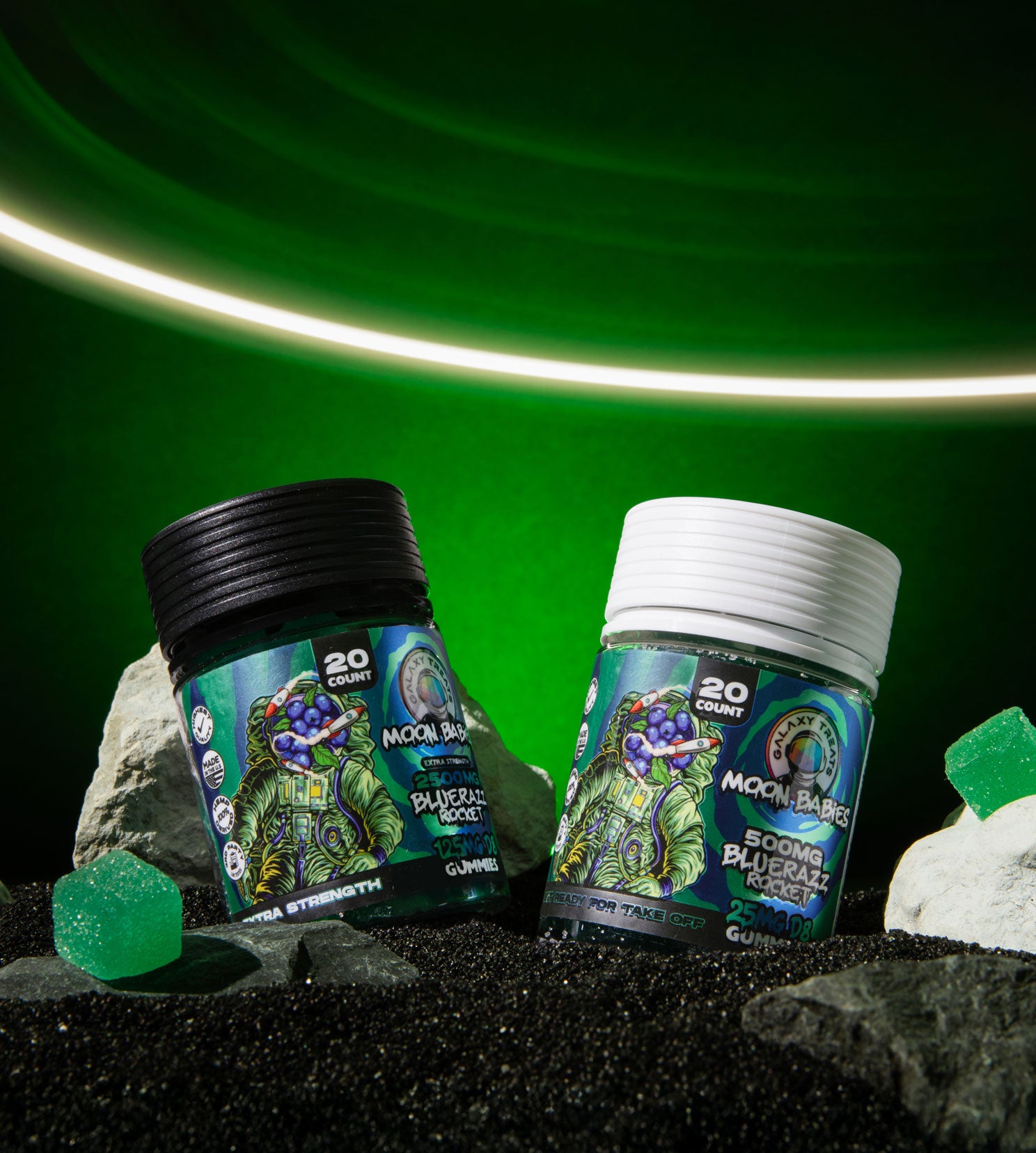
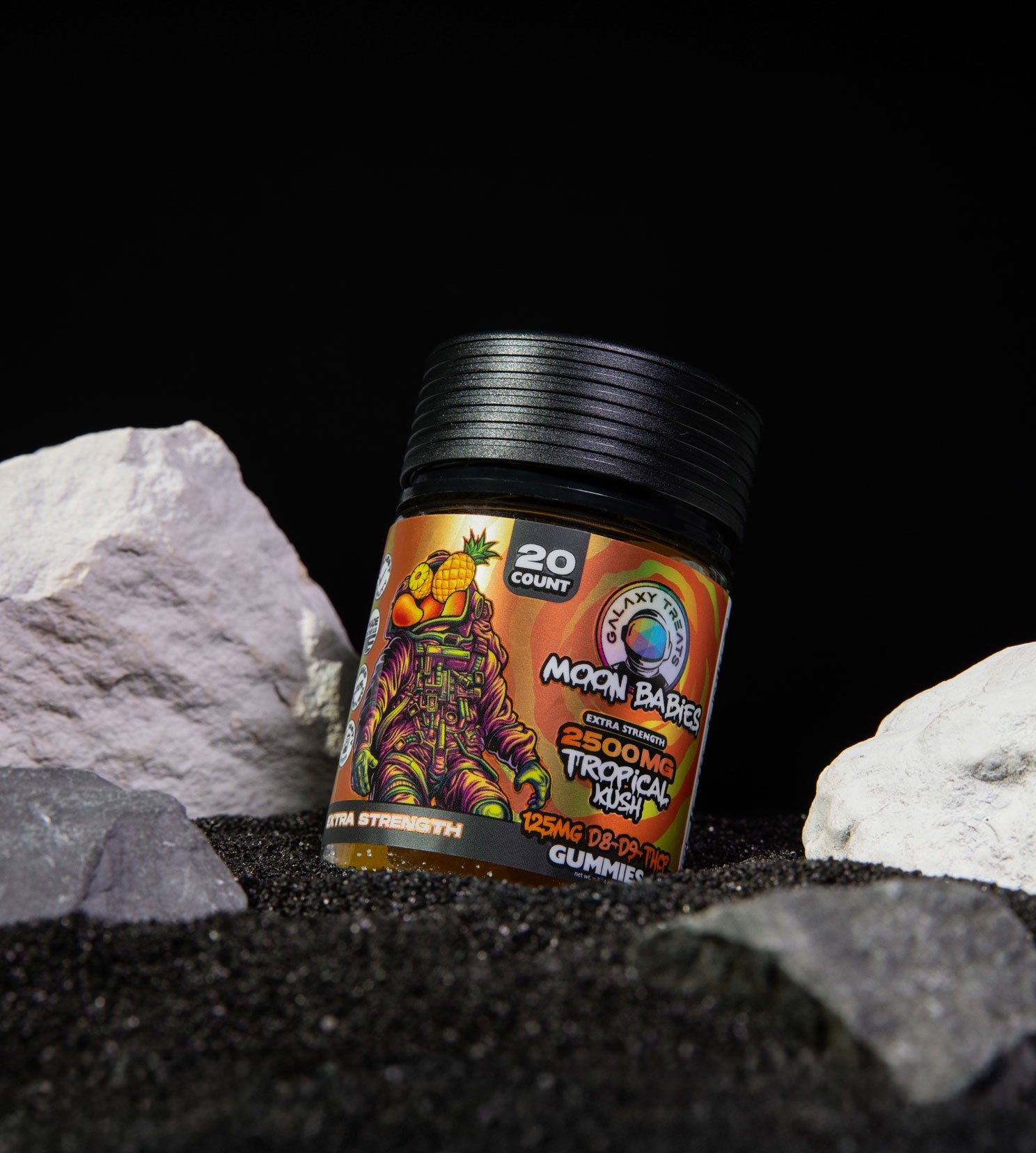
Galaxy Treats’ Extra Strength Gummies for example, feature multi-cannabinoid blends that include THCP alongside Delta 8 and Delta 9 engineered for experienced users who want deep relaxation, strong mood elevation, and seriously elevated vibes. These blended approaches let you experience THCP’s potency in a more controlled, enjoyable way.

The Bottom Line
THCP is one of the most exciting cannabinoids to emerge in recent years. Its unique molecular structure and powerful receptor binding set it apart from every other THC variant on the market, and its ability to deliver intense, long-lasting effects at tiny doses makes it a compelling option for experienced users.
But it’s not a replacement for Delta 8 or Delta 9, it’s an addition to the lineup. Delta 8 remains the go-to for smooth, mellow vibes. Delta 9 is still the gold standard for a balanced, full-spectrum high. And THCP is the next-level option for seasoned astronauts ready to explore deeper space.
Whatever cannabinoid fits your vibe, the key is always the same: start with quality products, dose responsibly, and enjoy the ride. The galaxy’s got plenty of room to explore.
Disclaimer: This content is for educational purposes only and is not intended as medical or legal advice. Cannabis laws vary by state. Always consult your physician before trying new cannabinoid products, and verify current regulations in your area. Products mentioned are hemp-derived and intended for adult use only.