


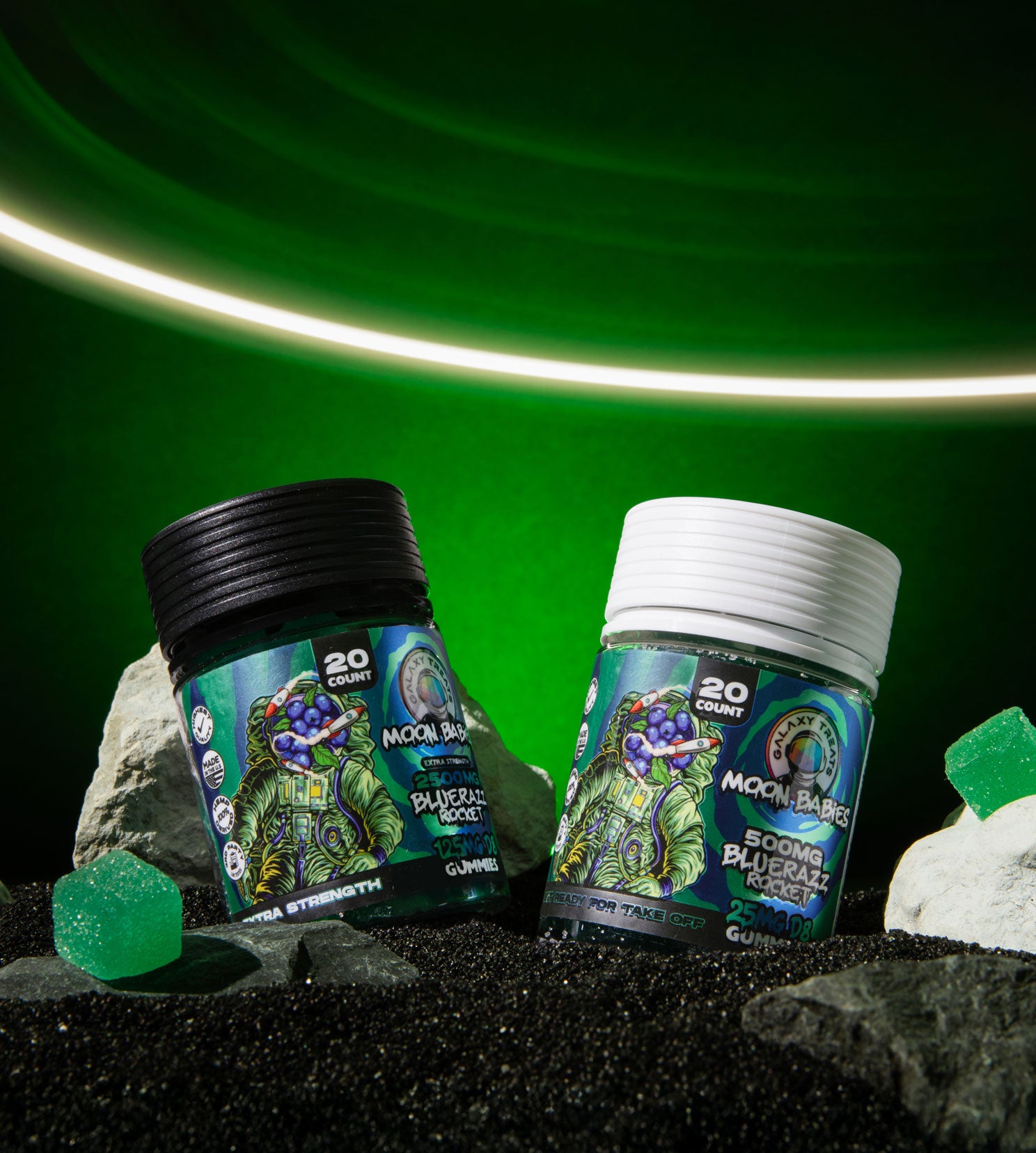

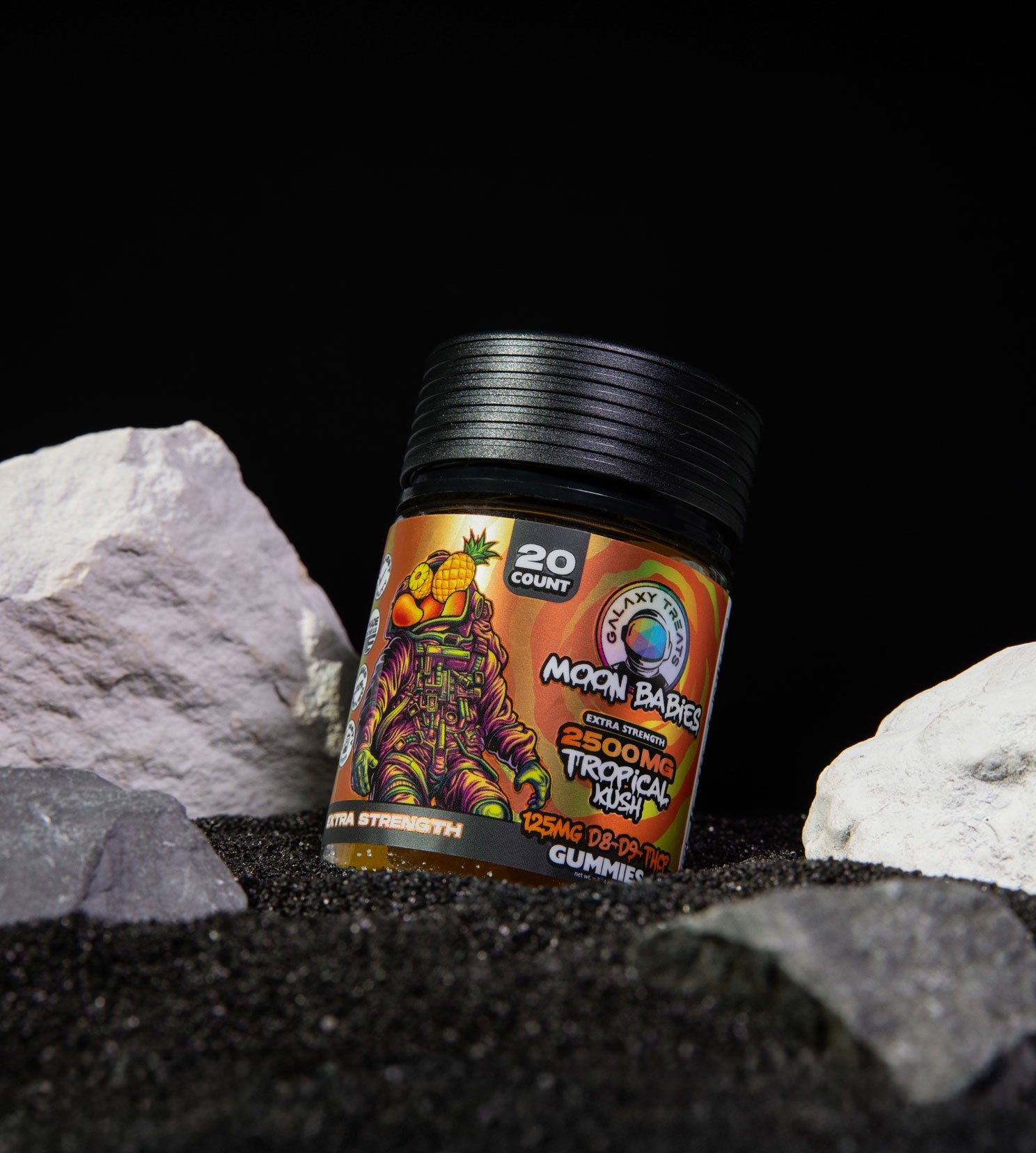

You are standing in front of a wall of gummies, and every label seems to be speaking a slightly different dialect. One jar says THC. The next says Delta 9. A third says Delta 8, and a fourth says THCA, which sounds like it belongs on a chemistry final rather than in a candy aisle. Somewhere in the middle of all that, a very reasonable question surfaces: is Delta 9 the same as THC, or are these two separate things that marketers decided to blur together?
The short answer is that Delta 9 is THC. The longer answer is far more interesting, and it explains why the hemp aisle looks the way it does. Here is the full breakdown from the crew at Galaxy Treats, where we have spent years handcrafting hemp-derived Delta 9 edibles in the USA with real fruit terpenes and third-party lab testing on every batch.
Is Delta 9 the Same as THC?
Yes. Delta 9 is THC. Its full chemical name is delta-9-tetrahydrocannabinol, and when someone says "THC" with no other qualifier attached, delta 9 is almost always the compound they mean. It is the main psychoactive cannabinoid in the cannabis plant, the one responsible for the euphoria, the warmth, the appetite, and the general sense that the couch has become a very reasonable place to spend the next four hours.
The confusion comes from the fact that THC works more like a family name than a single molecule. Tetrahydrocannabinol describes a group of closely related compounds that share the same core structure and differ only in small structural details. Delta 9 is the most abundant and most famous member of that family. Delta 8, delta 10, THCA, and THCP are all relatives sitting at the same table, and each one behaves a little differently once it reaches your system.
So asking whether Delta 9 is the same as THC is a bit like asking whether a Labrador is the same as a dog. Delta 9 is THC. Not every THC is Delta 9. That distinction is the single most useful thing you can carry with you the next time you read a product label.
Why Does the Same Compound Have Two Different Names?
The answer is chemistry, and it is simpler than it sounds. THC molecules contain a ring structure with one double bond, and the number that follows the word "delta" tells you exactly where that double bond sits along the carbon chain. In delta 9, the bond sits at the ninth carbon. In delta 8, it sits at the eighth. That single-position shift is the entire structural difference between the two compounds, and it is enough to change how tightly each one binds to receptors in your body and how intense the resulting experience feels.
Researchers adopted the delta notation because they needed precision when comparing compounds that look nearly identical on paper. Consumer labeling has been catching up ever since. This is why a jar labeled only "THC gummies" is not telling you very much. That word alone does not reveal which cannabinoid is inside, how much of it you are getting per piece, or where it came from. The certificate of analysis does.
How Does Delta 9 THC Work in Your Body?
Your body arrived with a built-in system designed to interact with compounds like this one. The endocannabinoid system is a network of receptors that helps regulate mood, appetite, sleep, memory, coordination, and pain perception. Delta 9 THC produces its effects primarily by acting as a partial agonist at the CB1 receptor, which is concentrated in the regions of the brain that govern exactly those functions.
That receptor activity is why the experience feels the way it does rather than simply feeling like a sugar rush. It is also why route of consumption matters so much. When you inhale Delta 9, it moves through the lungs into the bloodstream within minutes. When you eat it, the compound travels through your digestive system and liver first, which slows everything down and stretches the experience out. Edibles typically take 30 to 90 minutes to make themselves known, peak somewhere around the two to three hour mark, and taper off over four to six hours total.
If you want the deeper version of this story, we mapped the whole route in how THC works in your body, and the timing specifics live in our THC dose timing guide.
Is Hemp-Derived Delta 9 the Same as Delta 9 from Marijuana?
Chemically, yes. A delta-9-tetrahydrocannabinol molecule extracted from hemp and a delta-9-tetrahydrocannabinol molecule extracted from a dispensary cannabis plant are the same molecule. Your CB1 receptors cannot tell them apart, because there is nothing to tell apart. The difference is agricultural and legal rather than molecular.
Hemp and marijuana are both Cannabis sativa L. They are not different species. The line between them is a legal threshold drawn around how much delta 9 THC the plant contains by weight, which means the plant gets classified, not the compound. Once the compound is extracted and measured into a gummy, it behaves exactly as delta 9 behaves. We covered this in more depth in our breakdown of hemp-derived Delta 9 versus cannabis-derived Delta 9, and compared the practical experience side by side in Delta 9 versus weed.
How Is Hemp-Derived Delta 9 Legal?
The 2018 Farm Bill defined hemp as cannabis containing no more than 0.3 percent delta-9 THC on a dry weight basis. The critical detail hiding in that sentence is the phrase "by weight." The threshold is a percentage of the total product mass, not a cap on milligrams per serving.
Run the math and the picture gets clearer. A gummy that weighs five grams can hold roughly 15 milligrams of delta 9 THC and still sit under the 0.3 percent line. That is the arithmetic behind every compliant 10mg Delta 9 gummy on the market, including ours. The compound is identical to what you would find at a dispensary. The formulation is simply built to stay inside the federal definition.
We walked through the full legislative history in our guide to the 2018 Farm Bill and the future of hemp.
What Is Changing in Federal Hemp Law?
This is where an honest article has to keep up with the calendar. In November 2025, Congress amended the federal definition of hemp through Section 781 of Public Law 119-37, replacing the delta-9-only measurement with a total THC standard that folds in THCA and delta 8, and adding a cap of 0.4 milligrams of total THC per container on finished consumable products. The change was originally scheduled to take effect on November 12, 2026, and a stopgap funding bill signed in September 2026 moved most of those provisions to December 11, 2026.
Translated out of legislative language: the framework that made hemp-derived Delta 9 gummies widely available is being rewritten, and the timeline has already shifted once. Legislative efforts to amend or delay the provisions are ongoing, so anyone reading this months from now should verify the current status before drawing conclusions.
State law adds another layer entirely. Several states enforce rules that are stricter than the federal standard, which is why availability varies depending on where you live. Our state legality page is kept current, and it is worth a look before you order.
How Does Delta 9 Compare to Delta 8, THCA, and THCP?
Once you understand that THC is a family, the rest of the hemp aisle stops looking like alphabet soup. Here is how the major members relate to one another.
Delta 8 THC is the mellower cousin. That single double-bond shift makes it noticeably less potent than delta 9, and most people describe the experience as clearer and more functional, which is why it has become the go-to for daytime use. It was first isolated from cannabis in 1966, though it does not occur in significant amounts naturally, meaning concentrated delta 8 is typically produced from hemp-derived CBD. Our full comparison lives in Delta 8 versus Delta 9.
THCA is the raw, acidic precursor to delta 9 and it does not produce intoxication in that form. Apply heat and THCA converts to delta 9 THC through decarboxylation, which is precisely what happens the moment you spark a pre-roll. This is why raw flower and a lit joint behave so differently. We broke it down in what is THCA and compared them directly in THCA versus Delta 9 THC.
THCP is the heavyweight of the family, discovered in 2019 and notable for binding to CB1 receptors far more aggressively than delta 9 does. It is not a beginner cannabinoid, and it should be approached with genuine respect for the dose. See how THCP compares to Delta 8 and Delta 9 for the full picture.
The practical takeaway is that Delta 9 sits in the middle of that lineup. It is stronger and fuller than delta 8, more predictable than raw THCA, and considerably gentler than THCP. For most people looking for the classic cannabis experience in a measured, repeatable format, Delta 9 is the sweet spot.
How Strong Is a 10mg Delta 9 Gummy?
Ten milligrams is widely treated as a standard adult serving, and for good reason. It is enough to produce noticeable euphoria and body relaxation for most people without turning an evening into an unplanned expedition. That said, tolerance varies enormously between individuals, and the same gummy can feel gentle to one person and substantial to another.
If you are new to this, start with half a gummy and wait a full 90 minutes before deciding anything. Edibles are slow, and the most common mistake in the entire category is doubling up at the 45-minute mark because nothing seems to be happening yet. Patience is the whole strategy. You can always take more later. You cannot take less once it is in.
Our Delta 9 lineup is rated on a Launch Intensity scale so you know what you are stepping into before you open the jar. Berry Melon Lifter Delta 9 gummies sit at a Launch Intensity of 50 and lift without launching, which makes them a strong first pick. Purple Punch OG Delta 9 gummies come in at 55 with a grape-forward, wind-down feel. Tropical Kush Delta 9 gummies land at 60 for a slightly fuller ride. You can shop the full Delta 9 collection and find your altitude from there.
For beginners who want a complete walkthrough before their first jar, start with our complete guide to Delta 9 gummies for beginners.
How Do You Choose a Delta 9 Product Worth Buying?
The hemp market moves quickly, which means quality varies more than it should. A few things separate a product you can trust from one you should walk away from.
Start with the certificate of analysis. Every reputable brand publishes third-party lab results showing cannabinoid content and screening for contaminants, and every batch should have one. If a company will not show you the paperwork, that silence is your answer. Ours are published openly on our lab reports page.
Look at where the hemp was grown and how the flavor was built. Galaxy Treats products are crafted in the USA and made with real fruit terpenes rather than generic artificial flavoring, which is a large part of why our gummies taste like fruit instead of tasting like a supplement. Every batch is third-party tested for purity, and every order is backed by a 30-day satisfaction guarantee. If it does not work for you, we make it right.
Finally, check that the potency is stated per piece rather than only per jar. A label advertising 200mg total across 20 gummies is telling you the same thing as 10mg per gummy, but only one of those numbers helps you dose accurately.
The Bottom Line on Delta 9 and THC
Delta 9 is THC. THC is the family, delta 9 is the headliner, and everything else on the shelf is a relative with its own personality. Once that clicks, product labels stop being a puzzle and start being useful information. You can read a certificate of analysis, understand what 10mg means in practice, and pick a product based on what you want out of the evening rather than on which jar has the loudest packaging.
That is the whole point of doing this well. Ready to find your flavor? Explore our hemp-derived Delta 9 gummies and pick your launch window.
Frequently Asked Questions
Is Delta 9 the same as THC?
Yes. Delta 9 is THC. Its full name is delta-9-tetrahydrocannabinol, and it is the compound most people mean when they say THC without any other qualifier. THC functions as a family name covering several closely related compounds, including delta 8, delta 10, THCA, and THCP. Delta 9 is the most abundant and most well-known member of that family, so the two terms are used interchangeably in everyday conversation.
What is the difference between Delta 9 and THC?
There is no difference in the sense of them being two separate compounds. THC is the broader category, and delta 9 is the specific molecule within it that most product labels and most conversations are referring to. The only time the distinction matters is when a label says THC without specifying which cannabinoid is inside, in which case you should check the certificate of analysis to see whether you are getting delta 9, delta 8, or a blend.
Is Delta 9 stronger than Delta 8?
Generally yes. Delta 9 and delta 8 differ by the position of a single double bond in the molecule, and that small structural change makes delta 8 noticeably less potent. Most people describe delta 8 as milder and more clear-headed, while delta 9 delivers the fuller, more classic cannabis experience. Someone comfortable with a 25mg delta 8 gummy may find a 10mg delta 9 gummy comparably strong.
Is hemp-derived Delta 9 legal?
Under the 2018 Farm Bill, hemp is defined as cannabis containing no more than 0.3 percent delta-9 THC by dry weight, which is what allowed compliant hemp-derived Delta 9 products to be sold nationwide. That definition has since been amended by Section 781 of Public Law 119-37, which introduces a total THC standard and a per-container limit, with most provisions scheduled to take effect in December 2026. State laws also vary, so check both current federal status and your local rules before ordering.
Will hemp-derived Delta 9 show up on a drug test?
Yes, it can. Standard drug tests screen for THC metabolites, and they do not distinguish between delta 9 sourced from hemp and delta 9 sourced from marijuana. Because the molecule is identical, the test result will be identical. If you are subject to workplace testing, hemp-derived Delta 9 carries the same risk as any other THC product.
How long does Delta 9 stay in your system?
It depends heavily on frequency of use, body composition, metabolism, and dose. Occasional users typically clear it faster than daily users, and edibles can linger longer than inhaled products. We covered the variables in detail in our guide on how long Delta 9 stays in your system.
How much Delta 9 should a beginner take?
Start with half of a 10mg gummy, which puts you at roughly 5mg, and wait a full 90 minutes before considering more. Edible onset is slow and unpredictable compared with inhalation, and taking a second dose too early is the most common way a pleasant evening turns into an uncomfortable one. Once you know how 5mg feels, you can adjust upward with confidence.