




If you have been browsing hemp shelves lately, you have probably noticed two acronyms sharing the spotlight: THC and THCP. They sound like siblings, sit next to each other in the cannabinoid lineup, and both promise a real lift. But comparing THCP vs THC is not just splitting hairs over molecules. One is the cannabinoid that built the modern cannabis industry. The other is a newer discovery that, on a molecular level, binds your endocannabinoid system far more aggressively than its famous cousin.
At Galaxy Treats, we live at the intersection of these two. Our gummies, pre-rolls, flower, and sour belts are all crafted in the USA with real fruit terpenes, third-party lab-tested for purity, and built for cosmic-level good times. Whether you are a first-time astronaut or a seasoned space traveler, knowing the difference between THCP and THC is the difference between picking the product that gently lifts you and the one that fully launches you. Below is everything you need to know to choose the right cannabinoid for the ride you want.
What Is THCP and How Does It Compare to THC?
THCP, short for tetrahydrocannabiphorol, is a naturally occurring phytocannabinoid found in the cannabis plant. It was first identified in late 2019 by an Italian research team led by Cinzia Citti, who isolated the molecule from a medical cannabis variety known as FM2 and published their findings in Scientific Reports, part of the Nature family of journals. That single paper changed how researchers think about cannabis potency, because it introduced a cannabinoid that, on paper, makes delta-9 THC look modest by comparison.
THC, on the other hand, is the cannabinoid most people are already familiar with. Delta-9 THC is the primary intoxicating compound in cannabis. It has been studied for decades, it is the molecule responsible for the classic cannabis high, and it is the legal benchmark for hemp products under the 2018 Farm Bill. Hemp-derived delta-9 is federally legal as long as a product contains less than 0.3 percent delta-9 THC by dry weight, which is why brands like Galaxy Treats can ship hemp-derived delta-9 gummies to most of the country.
Delta-8 THC sits in the same family. It is a hemp-derived isomer of delta-9 that produces a smoother, slightly less intense high, and it has become the entry point for a huge chunk of the modern hemp audience. You can read our full breakdown of Delta-8 vs Delta-9 THC and what makes them different for a deeper comparison. The short version is that delta-8 and delta-9 are the workhorse cannabinoids of the hemp market. THCP is the heavyweight that joins the conversation when you want more.

Why Is THCP Stronger Than THC?
The difference between THCP and THC comes down to a single feature of their molecular structure: the side chain. Most cannabinoids, including delta-9 THC, have a five-carbon alkyl side chain attached to their core ring system. That side chain is essentially the docking mechanism that lets the molecule bind to your CB1 receptors, which are the primary cannabinoid receptors in your brain and central nervous system. THCP carries a seven-carbon side chain instead of five.
That structural change might sound like a footnote, but it is the entire story. According to the Citti et al. 2019 study, THCP binds CB1 receptors approximately 33 times more strongly than delta-9 THC does in laboratory testing. CB2 receptor binding was also significantly higher. CB1 receptor binding is the mechanism most closely associated with the psychoactive effects people feel from cannabis, so a cannabinoid that binds 33 times tighter than delta-9 has the potential to produce noticeably more intense effects at much smaller doses.
Important context: receptor binding affinity measured in a lab is not the same thing as a 33x stronger high in a human. Subjective effects depend on dose, individual physiology, tolerance, the rest of the cannabinoid profile, and how the product is consumed. But the binding data does help explain why anecdotal reports about THCP describe it as significantly more potent than standard THC products, and why responsible THCP formulations use single-digit milligram doses rather than the 10mg to 25mg standard you see in delta-8 and delta-9 gummies. For a closer look at user-reported effects, our blog on THCP effects and what you need to know about this super-potent cannabinoid walks through what to expect.
How Do the Effects of THCP and THC Differ?
The effects of delta-9 THC are well-documented and pretty predictable for most users. Expect mood elevation, mild to moderate euphoria, appetite stimulation, time distortion, and a body lift that depends on the strain or terpene profile. A 10mg delta-9 gummy is widely considered a standard adult serving and usually delivers a balanced, social high. Delta-8 produces a similar effect profile but in a gentler, less anxious package, which is why so many first-time hemp users start there.
THCP effects tend to feel layered on top of that baseline rather than completely different in character. Most users describe a more pronounced body experience, longer duration, deeper relaxation, and a stronger sense of euphoria compared to an equivalent amount of delta-9. Because THCP binds tighter and stays engaged longer, the experience can build more gradually and last longer than a comparable THC dose.
Here is how the practical differences usually shake out for users:
-
Intensity: THCP feels heavier per milligram. A few milligrams of THCP can rival a standard delta-9 serving in perceived strength.
-
Duration: THCP effects often last longer than a standard delta-9 high, especially with edibles where onset is already extended.
-
Body vs head: Many users report THCP delivers a heavier body component and a more relaxed, sedated headspace, particularly when combined with delta-8 in a multi-cannabinoid formula.
-
Tolerance: Because THCP binds aggressively, even experienced THC users frequently feel its effects without needing to scale up dosing.
If you are curious about combining cannabinoids responsibly, our guide on how to safely stack D8 edibles with other cannabinoids is a good starting point before you experiment with THCP-forward formulations.

Are THCP and THC Legal Under the Same Rules?
Hemp-derived THCP exists in the same federal legal space as other hemp cannabinoids. Under the 2018 Farm Bill, hemp and its derivatives are legal at the federal level as long as the finished product contains less than 0.3 percent delta-9 THC by dry weight. Because THCP is not delta-9 THC, it does not count toward that 0.3 percent threshold. As long as a THCP product is derived from federally compliant hemp and meets the delta-9 limit, it generally falls within the same legal framework as hemp-derived delta-8, delta-9, HHC, and THCA products.
That said, state laws vary. A handful of states restrict or ban specific hemp-derived cannabinoids regardless of federal status, and the regulatory landscape for novel cannabinoids continues to evolve. Always check your local laws before ordering, and make sure any THCP product you buy comes with a current third-party lab report. Every Galaxy Treats product is third-party lab-tested for purity and posted with public certificates of analysis, so you can verify exactly what is in your gummy or pre-roll before you take off.
Which Galaxy Treats Products Contain THCP vs THC?
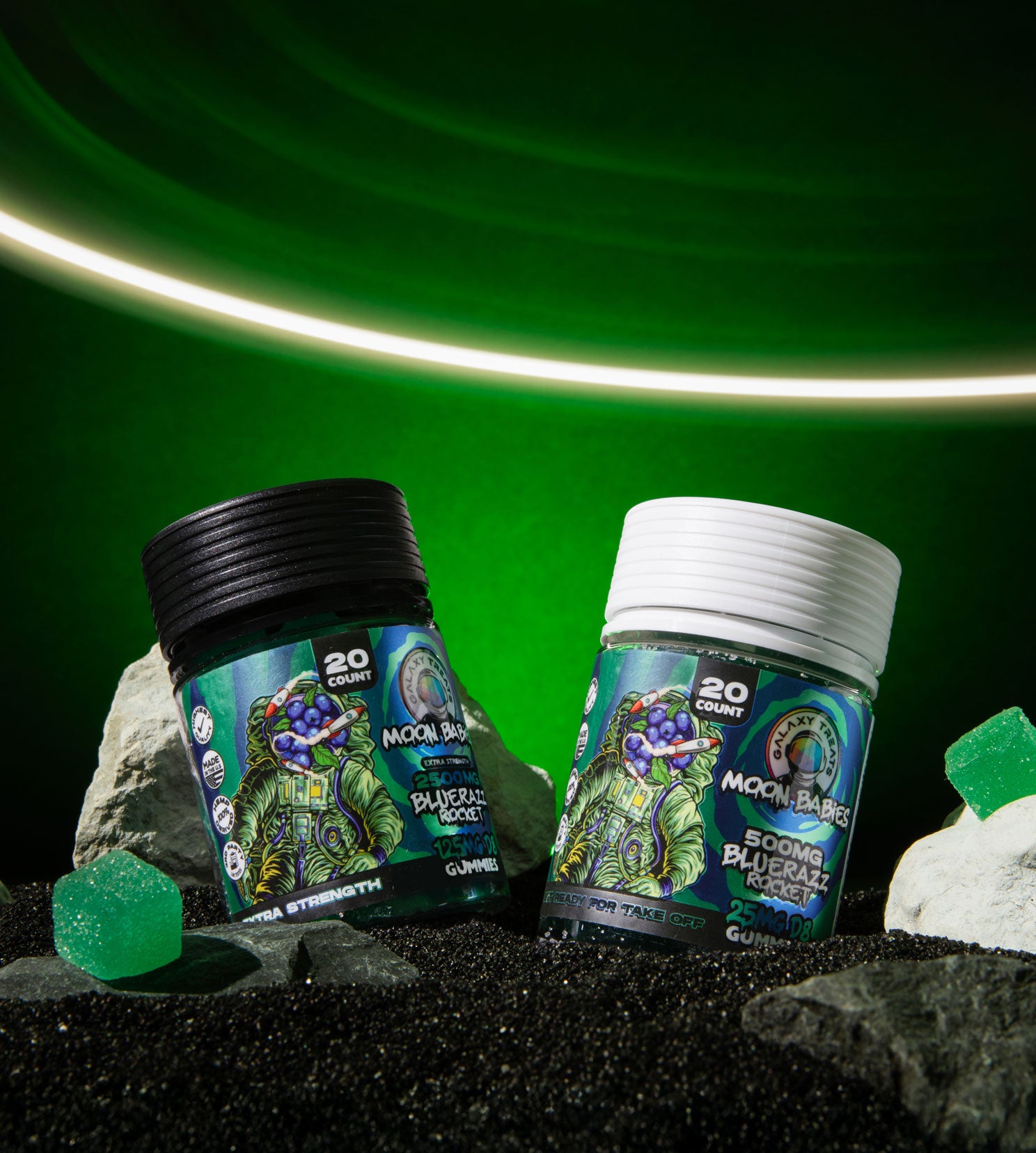
If you want a clean, single-cannabinoid experience, our delta-8 and delta-9 lines are your launchpad. The Delta 8 Gummies in Starberry, Bluerazz Rocket, and Mars Mango deliver a smooth 25mg dose per gummy with a Launch Intensity around 75 to 80, which is a great middle-ground experience. The Delta 9 Gummies in Berry Melon Lifter, Tropical Kush, and Purple Punch OG come in at 10mg per gummy with a Launch Intensity in the 50 to 60 range, which is perfect for first-timers or a controlled social dose.
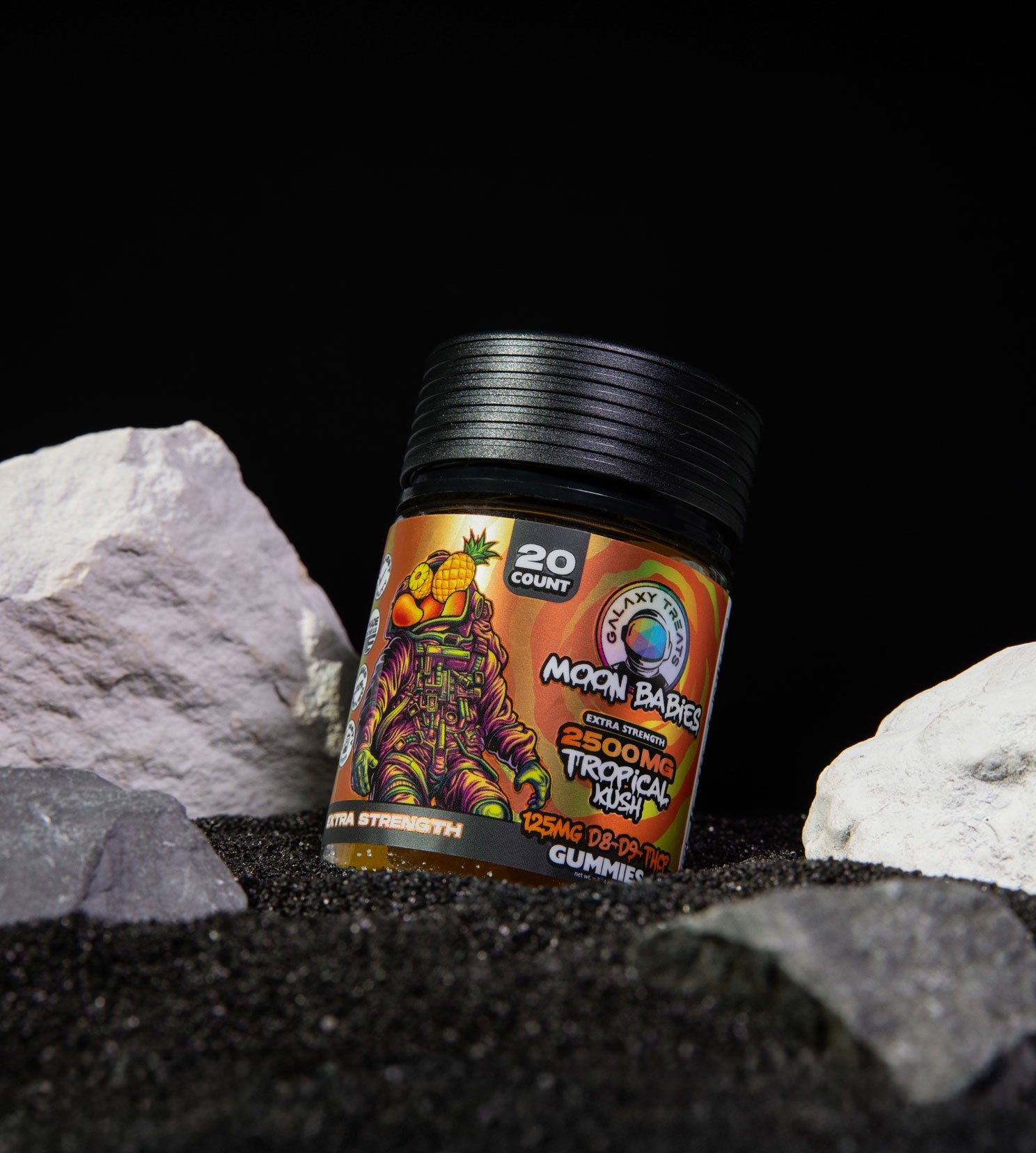
If you want the THCP experience, head to our Galaxy Treats THCP collection. This is where you will find our Extra Strength D8-D9-THCP gummies in Blue Punch OG, Berry Melon Lifter, and Tropical Kush, each dosed at 125mg of combined cannabinoids per piece with Launch Intensities ranging from 85 to 100. We blend THCP with delta-8 and delta-9 rather than running it solo because the multi-cannabinoid approach delivers a more rounded, full-spectrum feel and lets us deliver a serious experience without forcing the delta-9 number past comfortable territory.
For the bravest astronauts, our Sour Belts pack 300mg of D8, D9, HHC, and THCP per belt in Blue Razz Blast, Solar Strawberry, Rainbow Rocket, and Chile Lime Watermelon. These run at Launch Intensities of 85 to 95 and are not the place to start. Save these for nights when you have already cleared your calendar.
Want to compare THCP-forward edibles head-to-head with classic THC products? Our blog on THCP gummies and why they are the strongest edibles you can buy goes deeper into the formulation differences. If you want to understand THCP next to THCA specifically, our piece on THCP vs THCA, effects, potency, and how to choose covers another important comparison.

How Should You Dose THCP Compared to THC?
Dosing THCP requires more humility than dosing standard THC. The general rule with hemp edibles is to start low, wait at least two hours for the full effect to develop, and then decide whether to take more. With THCP, that rule is non-negotiable. Because the molecule binds CB1 receptors so much more tightly than delta-9, a dose that feels mild on paper can deliver a much heavier experience than expected.
Practical guidance for choosing between THCP and THC:
-
If you are new to hemp edibles, start with a 5mg or 10mg delta-9 gummy and skip THCP entirely until you have a sense of your baseline tolerance.
-
If you regularly enjoy 10mg to 25mg of delta-9 with no issue, you may be ready for a half-serving of a THCP-blended gummy. Start there and wait.
-
If you are a seasoned user with a high tolerance and you want a heavier experience, a full 125mg D8-D9-THCP gummy from the Extra Strength line is a strong evening session and not a daytime dose.
-
Always have a comfortable space, snacks, water, and zero obligations for the next several hours when trying a new THCP product.
Onset for edibles ranges from 45 minutes to two hours, with peak effects around the 90-minute to three-hour mark and a total duration that can stretch four to eight hours or longer depending on the dose. THCP-blended edibles tend to sit at the longer end of that range. For more on the timing side of things, our blog on how long the high from delta 8 gummies lasts is a useful reference for general edible timing, even though THCP can extend it further.
Who Is THCP For, and Who Should Stick With Standard THC?
THC, in either delta-8 or delta-9 form, is the right pick for most users most of the time. It is well-studied, predictable, available in a huge range of dose sizes, and it pairs beautifully with terpenes and other minor cannabinoids. If you want a relaxed evening, a social buzz, a creative spark, or something to help you wind down before sleep, you do not need THCP. Our line of Orbital Terpene Gummies, dosed at 10mg of delta-9 with Sativa, Hybrid, and Indica terpene profiles, was built for exactly this kind of dialed-in, mood-targeted experience.
THCP makes sense in a narrower set of scenarios. It is for users who already have a comfortable tolerance to delta-9, who want a heavier and longer experience than standard hemp gummies deliver, and who appreciate the full-spectrum, multi-cannabinoid feel that comes from blending several cannabinoids together. THCP is also a great fit for users seeking deeper relaxation, more pronounced body effects, and stronger sleep support, especially when paired with the indica-leaning flavors in our Extra Strength line.
If you are still trying to figure out which cannabinoid lane is right for you, our Galaxy Treats relaxation collection lets you browse by the feeling you want rather than the molecule on the label. Sometimes the easiest way to compare THCP vs THC is to start with the vibe and work backward into the chemistry.
Is THCP Safe to Use?
THCP is a relatively young cannabinoid in terms of formal research. The 2019 Citti study established its presence and binding profile, and follow-up research has continued to explore its pharmacology, but the long-term human data set is much smaller than the body of research on delta-9 THC. What we do know is that hemp-derived THCP, when sourced from compliant hemp, manufactured in a controlled facility, and third-party lab-tested for purity, follows the same safety considerations as any other hemp cannabinoid.
Standard precautions apply. Do not drive or operate machinery after using THCP or any THC product. Avoid THCP if you are pregnant or nursing. Consult a physician before use if you take prescription medications or have an underlying medical condition. Start with the lowest possible dose, especially if you have any history of anxiety with cannabis. Buy only from brands that publish third-party certificates of analysis showing exact cannabinoid content and the absence of heavy metals, pesticides, and residual solvents. Every Galaxy Treats product is tested by an independent lab, and we make every certificate of analysis publicly available.

THCP vs THC: The Bottom Line
THCP and THC share a family resemblance, but the molecule that links them is also what separates them. A seven-carbon side chain instead of five is enough to multiply CB1 binding affinity by an order of magnitude, which is why even tiny amounts of THCP can rival standard THC doses in perceived strength. THC remains the cannabinoid that built modern cannabis culture and the one most users will continue to reach for. THCP is the upgrade for nights when you want something heavier, longer, and more layered.
Whichever side of the comparison you land on, Galaxy Treats has a product designed for it. Our delta-8 and delta-9 gummies cover the everyday lift. Our THCP-blended Extra Strength gummies and sour belts deliver the deep-space experience. Everything we make is crafted in the USA with real fruit terpenes, third-party lab-tested for purity, and backed by a 30-day satisfaction guarantee. Pick your altitude and blast off.
Frequently Asked Questions
Is THCP stronger than THC?
Yes. In laboratory testing, THCP binds to CB1 receptors approximately 33 times more strongly than delta-9 THC, which is the binding site most associated with the cannabis high. That binding affinity does not translate to a literal 33-times-stronger experience in humans, but it does explain why THCP products are typically dosed in much smaller milligram amounts than delta-8 or delta-9 products and why users consistently report a more intense, longer-lasting effect.
Will THCP show up on a drug test?
Most likely, yes. Standard drug tests are designed to detect THC metabolites, and because THCP is structurally similar to delta-9 THC, the body metabolizes it through similar pathways. Any hemp-derived THC product, including THCP, can cause a positive result on a drug test. If you are subject to drug testing for work, sports, or any other reason, avoid all THC and THC-related cannabinoids, including delta-8, delta-9, HHC, THCA, and THCP.
How long does THCP take to kick in?
THCP follows the same general timing as other THC edibles. Expect onset between 45 minutes and two hours, peak effects somewhere between 90 minutes and three hours, and a total duration of four to eight hours or longer depending on the dose, your tolerance, and what else you have eaten that day. THCP-blended edibles often sit at the longer end of that range because the molecule stays bound to receptors longer than delta-9 alone.
Can I take THCP and delta-9 THC together?
You can, and many products are formulated that way. Galaxy Treats Extra Strength D8-D9-THCP gummies blend all three cannabinoids in a single dose because they complement each other through what is often called the entourage effect. Combining cannabinoids is generally a more rounded experience than taking any one in isolation. That said, combining cannabinoids also increases overall intensity, so if you have not tried a blended formula before, start with half a gummy and wait the full two hours before deciding to take more.
Is THCP legal in the United States?
Hemp-derived THCP is federally legal under the 2018 Farm Bill as long as the finished product contains less than 0.3 percent delta-9 THC by dry weight. THCP itself is not delta-9 THC, so it does not count toward that limit. However, a handful of state and local jurisdictions restrict specific hemp-derived cannabinoids beyond the federal rule, so check your state laws before ordering. Galaxy Treats only ships THCP products to states where they are legal.
How much THCP should I take the first time?
Start small. If you are already comfortable with 10mg to 25mg of delta-9, try a half-serving of a THCP-blended gummy and wait two full hours before deciding whether to take more. If you are newer to hemp edibles or you have a lower tolerance, do not start with a THCP product at all. Begin with a 10mg delta-9 gummy first and work your way up from there. The biggest mistake people make with THCP is treating it like a standard THC product and dosing too high too fast.
What is the difference between THCP and THCA?
THCA is the raw, non-intoxicating precursor cannabinoid that exists in fresh cannabis flower. When you heat it through smoking, vaping, or cooking, it converts into delta-9 THC, which is what produces the high. THCP is a separate cannabinoid that is already psychoactive without needing to be heated. THCA is about activation and is the cannabinoid that powers flower and pre-rolls. THCP is about potency and is what gives certain edibles their heavier feel. Our blog on THCP vs THCA dives much deeper into the comparison.