




Let's skip the countdown and go straight to liftoff: yes, Delta 8 will very likely cause you to test positive on a standard drug test. It is one of the most common questions we hear from cadets new to the galaxy, and it usually comes with a hopeful follow-up. If Delta 8 is hemp-derived and sold openly in so many states, shouldn't it slip past the test? Unfortunately, drug tests were never designed to care where your THC came from. They look for what your body leaves behind after the ride, and Delta 8 leaves behind a molecule that looks almost identical to the one regular cannabis leaves behind.
At Galaxy Treats, we would rather hand you the real flight data than a comforting myth. We handcraft our Delta 8 gummies in the USA with real fruit terpenes and third-party lab testing, and that same commitment to transparency is why we are laying out the science plainly here. Below, we break down how drug tests work, why Delta 8 triggers them, how long it can stick around, and what that means for you if testing is part of your life. If you are brand new to this cannabinoid, our guide to what Delta 8 THC is is a great pre-flight briefing.
The Short Answer: Yes, Delta 8 Can Make You Fail a Drug Test
The clearest evidence comes from a 2023 study published in the Journal of Analytical Toxicology and funded by the federal agency that oversees workplace drug testing. Researchers tested urine samples containing the main Delta 8 metabolite against three widely used cannabinoid screening kits, and the kits reacted to the Delta 8 metabolite at 87% to 112% of the strength they react to the regular THC metabolite at the standard 50 ng/mL cutoff. In plain terms, the screening tests treated Delta 8 almost exactly like Delta 9. The authors concluded that urine containing enough of the Delta 8 metabolite will likely screen positive even when there is zero Delta 9 present.
That finding is not a one-off. A separate evaluation of six commercially available urine immunoassays found that every kit cross-reacted with Delta 8 THC and its metabolites, with sensitivity varying by brand and cutoff level. So whether your employer, clinic, or court uses one testing brand or another, the outcome for a Delta 8 user tends to land in the same place.
Why Does Delta 8 Show Up on a Drug Test?
To understand why Delta 8 lights up the dashboard, it helps to know what a drug test is looking for in the first place. Hint: it is not the THC you took.
What Are Drug Tests Screening For?
Standard urine drug tests search for THC-COOH, an inactive byproduct your liver creates as it breaks THC down. Federal workplace guidelines use a two-step system. According to the SAMHSA Medical Review Officer manual, a specimen must first screen at or above 50 ng/mL on an immunoassay, then confirm at or above 15 ng/mL of the Delta 9 metabolite on a more precise lab test before it is reported as positive. Many private employers follow similar thresholds, and some use lower cutoffs that catch even smaller amounts.
How Does Your Body Process Delta 8?
Delta 8 and Delta 9 are isomers, which means they share the same atoms arranged in a slightly different order. That tiny difference in where one chemical bond sits is what makes Delta 8 feel smoother and less intense for many people. It does not change how your body processes it. Testing lab Aegis Sciences notes that Delta 8 and Delta 9 follow the same metabolic pathways, so just as Delta 9 becomes Delta 9 THC-COOH, Delta 8 becomes Delta 8 THC-COOH. For a fuller tour of that journey from gummy to bloodstream to liver, check out our breakdown of how THC works in your body.
Why Can't a Standard Screen Tell Delta 8 and Delta 9 Apart?
Immunoassay screens work by using antibodies that grab onto a specific molecular shape. Because the two THC metabolites are nearly identical in structure, the antibodies grab both. Aegis states directly that Delta 8 and THC isomers cannot be distinguished by cannabinoid immunoassay tests. Here is a fun piece of cosmic trivia that seals the deal: the Journal of Analytical Toxicology study explains that scientists used the Delta 8 metabolite as a stand-in for the Delta 9 metabolite when the original THC screening tests were being developed in the late 1970s and early 1980s. Delta 8 was part of the blueprint, so it makes sense that the tests still recognize it. If you want the full side-by-side on these two cannabinoids beyond testing, our guide to Delta 8 vs Delta 9 covers effects, potency, and more.
What Happens After a Positive Screen?
In regulated testing, a positive screen gets sent for confirmation using gas or liquid chromatography paired with mass spectrometry. These methods are far more precise and are specifically calibrated to identify the Delta 9 metabolite. In that same federal study, confirmation labs did not report a Delta 8 only sample as positive for Delta 9, although a few laboratories struggled to separate the two metabolites until they adjusted their methods.
That might sound like a loophole, but we want to be honest about why it is a weak one to rely on. First, plenty of employers use instant test cups or non-regulated programs where a screen result is treated as the final word. Second, confirmation labs are increasingly capable of identifying Delta 8 separately, and an employer's policy may treat any THC as a violation regardless of which form it is. Third, and this one matters a lot, you cannot always be sure your product contains only Delta 8. In a study of commercial Delta 8 products purchased from retail stores, 35% contained detectable amounts of Delta 9 THC. If a trace of Delta 9 is riding along in your gummy, the confirmation test has exactly what it is looking for.
How Long Does Delta 8 Stay in Your System?
This is where the honest answer gets a little more nuanced. Most detection research was done with Delta 9, and dedicated Delta 8 studies are still limited. Because the two follow the same metabolic pathway, researchers and testing labs generally expect similar timelines, but individual results vary widely.
For cannabis in general, a critical review for drug court programs found that occasional users typically remain detectable in urine for up to 7 days, while chronic users may be detectable for longer than 21 days at standard cutoffs. The SAMHSA manual adds that infrequent use may produce positive screens for 1 to 5 days, and that with repeated use, THC accumulates in fatty tissue, which is what stretches the window for regular consumers. We dig deeper into timelines in our guides on how long Delta 8 gummies stay in your system and how long Delta 9 stays in your system. Keep in mind that the detection window is completely separate from how long you feel the effects. The high from an edible typically fades within hours, which we explain in our guide to how long a Delta 8 high lasts, while the metabolites can linger for days or weeks afterward.
What Factors Change Your Detection Window?
Frequency of use is the biggest variable. A single gummy on a Saturday night creates a very different metabolic footprint than a nightly routine, because frequent use gives THC time to build up in fat stores faster than your body can clear it. Dose matters too. A 25mg gummy like Starberry delivers a fraction of the cannabinoids found in an extra strength 125mg gummy, and our guide on how strong 125mg of THC really is explains why higher doses call for more respect in every sense. Body composition also plays a role, since THC is fat-soluble, which we explore in our article on how body fat percentage can influence edible duration. Metabolism, hydration, overall health, and the sensitivity of the specific test being used all shift the timeline as well. Because every one of these variables is personal, a blog, calculator, or friend cannot promise you a safe waiting period.
Does the Type of Drug Test Matter?
Urine testing is the most common method and the one most research on Delta 8 focuses on, but it is not the only tool in the lab. Saliva, or oral fluid, tests work differently. Rather than looking for the inactive metabolite, oral fluid testing targets active THC itself, which makes it better at catching recent use than use from last week. Blood tests have an even shorter window for occasional users, with research noting that measurable THC in the blood of occasional users generally points to exposure within the previous 6 to 8 hours. Hair testing sits at the far end of the spectrum, and urine and hair tests together can cover windows ranging from 1 to 90 days after last use depending on the method and the person. The key takeaway is that every one of these tests was built to find THC, and Delta 8 is a form of THC.
Is Any Delta 8 Product Safe for a Drug Test?
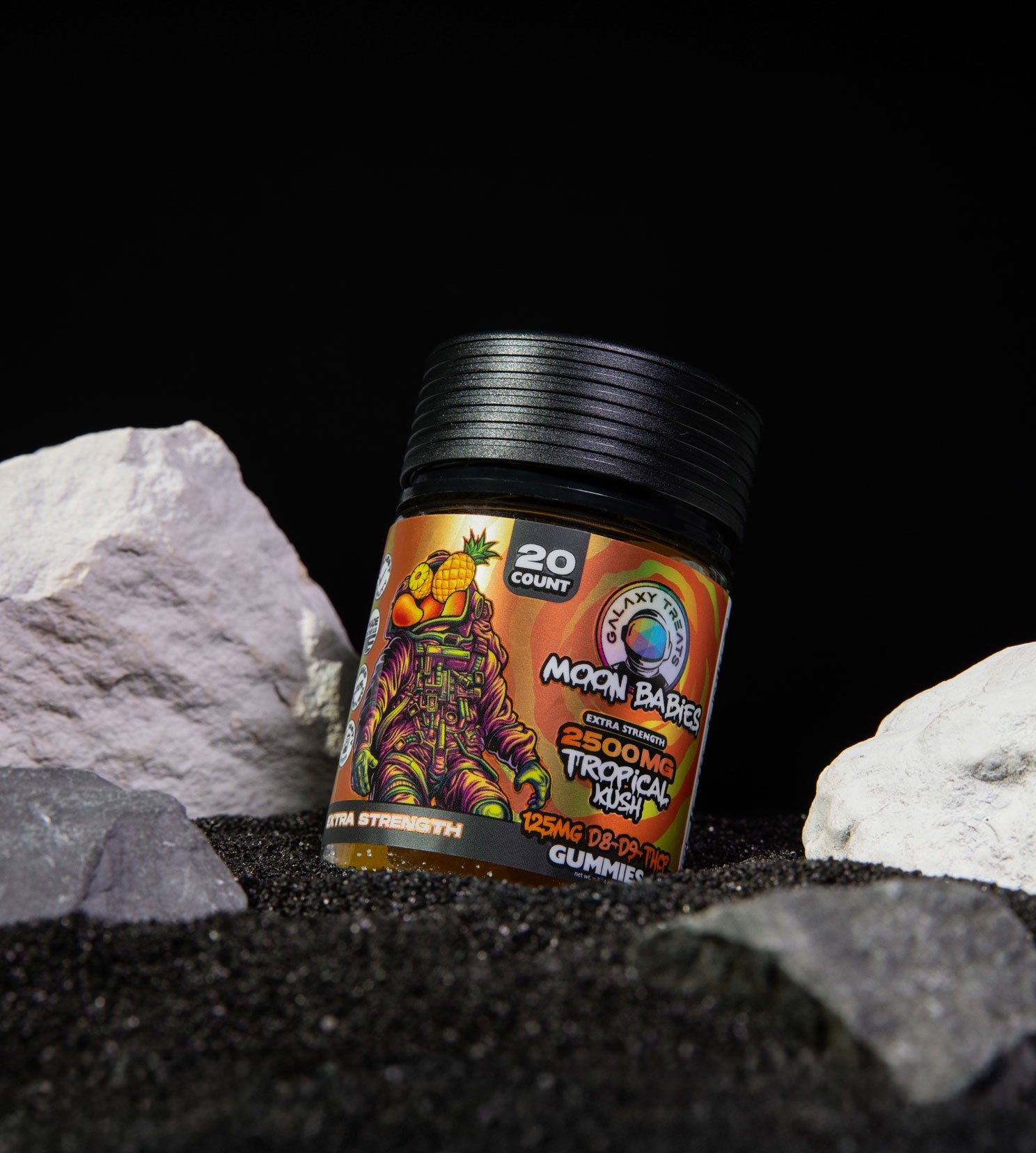
We will say it plainly, because you deserve a straight answer: every product containing Delta 8 carries a real risk of a positive result. That includes gummies, vapes, tinctures, and flower. The same is true for Delta 9, THCP, and blended formulas, since all of them are forms of THC that the body processes along similar lines. If you have been curious about how these cannabinoids compare, our explainer on THCP vs Delta 8 and Delta 9 is a great next read, but it will not change the drug test math.
You may also see products or detox kits online promising to be "drug test friendly" or to flush THC from your system overnight. We would treat those claims with serious skepticism. The science simply does not support them, and staking a job or a legal obligation on a marketing promise is a mission we would never recommend.
Should You Use Delta 8 If You Get Drug Tested?
If you are subject to drug testing for work, a professional license, athletics, probation, or any other obligation, the most reliable way to protect yourself is to hold off on Delta 8 and all other THC products. Legal availability in your state does not override an employer's substance policy, and many workplace policies evaluate a positive result simply as a THC result. When in doubt, read your workplace policy carefully or ask your HR team or medical review officer how they handle hemp-derived products. If you take prescription medications, it is also smart to consult your physician before using any cannabinoid.
If testing is not part of your world and you are of legal age in a state where these products are available, Delta 8 can be a genuinely enjoyable way to unwind. Start low, go slow, and give edibles plenty of time to kick in. Our guide on how to use THC gummies safely walks you through dosing and timing so your first flight is a smooth one. You can check where our products ship on our state legality page.
Know What You Are Launching: Why Lab Testing Matters
The Delta 9 contamination finding we mentioned earlier is a big reason quality matters so much in this category. Researchers analyzing commercial Delta 8 products found that the amount of Delta 8 listed on the label was only weakly connected to what was really inside, and some products contained cannabinoids that were never listed at all. When you are deciding what to put in your body, guesswork is not good enough.
That is why every Galaxy Treats product is third-party lab-tested for purity, and why we publish our results openly. You can review the potency and cannabinoid profile of what you are buying anytime on our Certificate of Analysis page. Knowing exactly what is in your jar will not change how a drug test reads Delta 8, but it does mean you can make informed choices without surprise ingredients along for the ride.
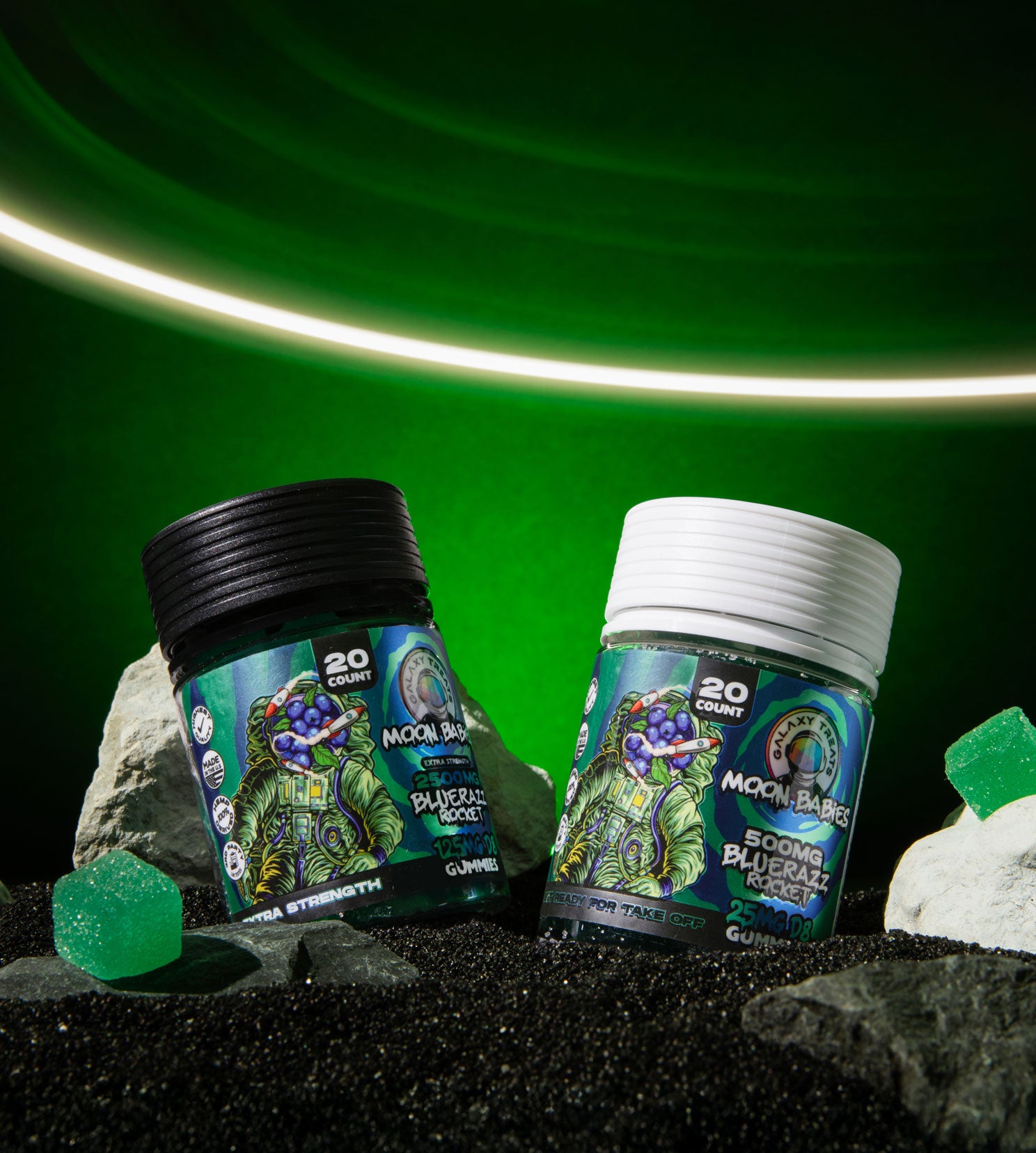
If you are clear for takeoff, our Delta 8 gummies collection is where the cosmic chill begins. Starberry Delta 8 gummies are our number one bestseller, pairing smooth strawberry flavor with 25mg of Delta 8 per gummy and a Launch Intensity of 80 that is strong enough to shift your mindset while staying easygoing. Bluerazz Rocket brings a tart blue raspberry lift, and Mars Mango offers a mellow tropical cruise at a Launch Intensity of 75. Seasoned astronauts can explore our extra strength Delta 8 gummies, including Razzleberry Limeade at a full Launch Intensity of 100. Not sure which flavor fits your orbit? Our guide to choosing the best Delta 8 gummies can help you pick.
Delta 8's Final Orbit at Galaxy Treats
There is one more piece of honest flight data worth sharing. Federal rules for hemp-derived cannabinoids are changing. A new federal hemp definition signed in November 2025 takes effect on November 12, 2026, and among other changes, it excludes cannabinoids that are chemically converted outside the plant, including Delta 8 made from CBD. For background on how we got here, our overview of the 2018 Farm Bill and the future of hemp covers the history.
As a result, our Delta 8 gummies are part of our Last Launch, and once they sell through, they are gone for good. You can read the full story in why these products are taking their final voyage. If Starberry, Bluerazz Rocket, or Mars Mango has been your go-to, now is the time to stock up on Delta 8 gummies before they leave our galaxy.
The Bottom Line on Delta 8 and Drug Tests
Delta 8 is a fun, flavorful, and often gentler way to experience THC, but it is still THC, and drug tests know it. Standard urine screens react to the Delta 8 metabolite almost exactly the way they react to regular THC, confirmation testing is getting better at spotting it, and some products on the market contain Delta 9 that nobody bothered to list. If drug testing is part of your life, the safest move is to skip it. If it is not, choose a brand that tests its products and shows you the results, start with a sensible dose, and enjoy the ride.
Frequently Asked Questions About Delta 8 and Drug Tests
Will one Delta 8 gummy make me fail a drug test?
It can. Even a single dose produces THC metabolites that standard urine screens are designed to detect, and the Journal of Analytical Toxicology found that common screening kits react to the Delta 8 metabolite almost as strongly as they react to the Delta 9 metabolite. Whether one gummy pushes you over the cutoff depends on the dose, your metabolism, your body composition, and how soon you are tested, so it is safest to assume that any Delta 8 use can lead to a positive result.
Can a drug test tell the difference between Delta 8 and Delta 9?
Standard immunoassay screening tests cannot tell them apart, because the metabolites of Delta 8 and Delta 9 are nearly identical in structure. More advanced confirmation methods like gas or liquid chromatography with mass spectrometry can separate the two when a lab calibrates for it, but many employers act on screening results, and many workplace policies treat any THC as a violation.
How long does Delta 8 stay in your system for a drug test?
Detection times for Delta 8 are expected to be similar to Delta 9 because the two share the same metabolic pathway. Research on cannabis suggests occasional users may test positive in urine for up to about 7 days, while frequent or chronic users may remain detectable for three weeks or longer. Dose, frequency of use, body fat, metabolism, and the test's cutoff level all affect the timeline, so there is not a guaranteed safe waiting period.
Does legal Delta 8 protect me from failing a workplace drug test?
Legal availability does not change how a drug test reads your sample or how your employer's policy treats the result. A positive screen from Delta 8 is generally evaluated as a THC result. If you are subject to testing, review your workplace substance policy or ask your HR department or medical review officer how hemp-derived THC is handled before using any THC product.
Do Delta 9 and THCP gummies show up on drug tests too?
Yes. Delta 9 THC is the exact compound that drug tests were originally built to detect, and THCP is another form of THC that the body processes along similar lines. Blended gummies that combine Delta 8, Delta 9, and THCP carry the same risk. If you need to pass a drug test, avoid all THC products, including hemp-derived options.
Will Delta 8 show up on a saliva test?
It can. Oral fluid tests look for active THC rather than the inactive metabolite found in urine, which makes them best at detecting recent use, often within the past day or so. Because Delta 8 is a form of THC with a very similar structure, it is reasonable to expect it may be detected, although research specific to Delta 8 in saliva testing is still limited.
Are Galaxy Treats Delta 8 gummies lab tested?
Yes. Every Galaxy Treats product is third-party lab-tested for purity, and you can review our results anytime on our Certificate of Analysis page. Lab testing confirms what is in your jar, but it does not make any THC product safe for a drug test, since Delta 8 itself is detectable.